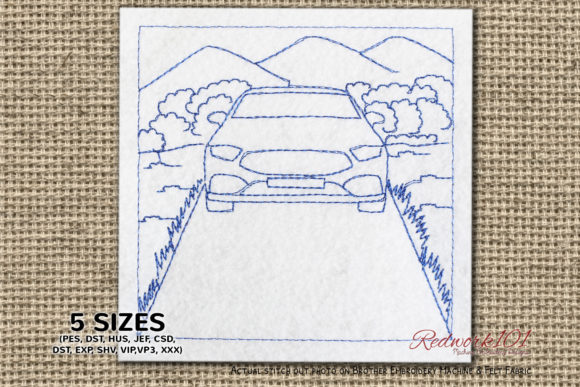
Car Parked on Road Redwork: A Pro Review for Brands
As an embroidery designer who has spent years digitizing and reviewing files for commercial use, I approach every new machine embroidery design with a critical eye toward scalability and brand application. When I first loaded the Car Parked on Road Redwork file to evaluate it for a client's upcoming merchandise line, my immediate impression was one of nostalgic charm mixed with practical simplicity. Redwork, by its very nature, relies on a single thread color to create outline-based imagery, which often results in a look that feels both handmade and premium. This specific design captures a classic transportation motif that is versatile enough for a boutique coffee shop, a vintage car club, or a local delivery service looking to add personality to their small business merch.
The visual personality of Car Parked on Road Redwork leans heavily into the rustic and friendly spectrum. It does not scream "corporate sterile"; instead, it whispers "artisanal care." For brands built on community connection, this is gold. The simplicity of the redwork style ensures that the design remains legible even when scaled down, a crucial factor when considering its use as an embroidered patch or a subtle chest logo on staff uniforms. However, before committing to a full production run, there are several technical and aesthetic factors we must dissect to ensure this digital embroidery file serves your brand identity effectively.
Real-World Application for Small Business Merchandise
In the realm of commercial embroidery, versatility is king. I envision Car Parked on Road Redwork performing exceptionally well across a variety of substrates. For a local café or bakery, this design would make a charming addition to barista aprons. The single-color execution means you avoid the complexity of color registration while still achieving a high-impact look. Imagine a navy blue apron with this design stitched in a vibrant brick red; the contrast creates a focal point that draws the customer's eye without overwhelming the uniform.
Beyond apparel, this design is a strong contender for cap embroidery. The clean lines of the car and road translate well to the curved surface of a baseball cap, provided the digitizing accounts for the push and pull of the fabric. For retail boutiques selling lifestyle goods, applying this motif to canvas tote bags creates an instant tote bag design that feels curated rather than mass-produced. It acts as a seal of quality, suggesting that the contents of the bag or the shop itself values tradition and craftsmanship. Furthermore, for Etsy sellers or crafters creating handmade product lines, this graphic can be resized into a small label tag, adding a professional finish to packaged goods.
Technical Considerations for Production Quality
While the aesthetic appeal is clear, the technical execution requires careful attention. Redwork designs are generally forgiving regarding stitch density because they utilize running stitches rather than dense satin fills. This makes them ideal for textured fabrics like linen, denim, or heavy cotton twill, where high-density stitching might cause puckering. However, because Car Parked on Road Redwork relies on outlines, the integrity of those lines is paramount. When scaling this design for a tiny patch—say, under two inches in width—you must ensure the spacing between the car details and the road line remains distinct. If the lines merge due to poor scaling or low-quality thread, the image loses its definition.
The product description notes that "The Box Stitch shown in the picture is optional." This is a critical detail for customization. In a branding context, you might choose to omit the box to allow the car to float freely on a pocket or sleeve, creating a more modern, minimalist vibe. Conversely, keeping the box can frame the image nicely for a standalone patch. It also mentions that "The color of the outer Box is a different color in most of the designs unless it is part of the design itself." As a designer, I advise checking your specific embroidery file settings. If you are using this for a monochromatic brand look, ensure your machine software allows you to easily swap thread colors or delete specific stop points if the box is not desired.
Fabric texture plays a significant role here. On smooth poplin shirts, the redwork lines will appear crisp and sharp. On looped towels or rough canvas, the running stitches may sink slightly, softening the look. This isn't necessarily a negative; it enhances the vintage feel. However, for items requiring frequent washing, such as work shirts or kitchen aprons, you must use a high-quality stabilizer. A cut-away stabilizer is often preferable for redwork on garments that will undergo industrial laundering, as it prevents the fabric from distorting around the open spaces of the design over time.
Elevating Brand Identity and Customer Trust
Why choose this specific motif? In the Transportation category, images of vehicles often symbolize journey, reliability, and movement. For a business, Car Parked on Road Redwork can subtly communicate that you are established and ready to serve. It adds a layer of narrative to your brand identity. When a customer sees a consistent visual theme across your packaging, your staff's attire, and your promotional gifts, it builds recognition and trust. The redwork style specifically taps into a current consumer trend that favors the "imperfectly perfect" look of handmade goods, even when produced commercially.
Using this design on customer gifts, such as a branded tote or a limited-run patch included with purchases, increases perceived value. It transforms a standard transaction into a memorable experience. The visual consistency of using a single accent color (the red thread) across various design assets helps tie your marketing materials together. Whether it is on a printable mockup for your website or the actual finished product in a customer's hand, the cohesiveness signals professionalism.
Designer Notes and Final Recommendations
Before you hoop up your production machine, I strongly recommend a few testing protocols. First, stitch out a sample in black and white. While red is traditional for redwork, viewing the design in high-contrast monochrome helps you verify that the line weights are balanced and no details are lost. Second, test the design on the exact fabric you intend to use for your final run. A design that looks stunning on muslin might behave differently on a thick wool blend or a stretchy polo.
Pay close attention to the hoop size requirements. Even though redwork is often small, ensure your hoop placement allows for proper stabilization, especially if placing the design near a seam or on a curved area like a cap front. Always create a physical mockup for client approval; screens can deceive, but a stitched sample tells the truth about thread tension and coverage. Finally, confirm the commercial licensing terms associated with your purchase of Car Parked on Road Redwork. Ensure you have the rights to use the digital embroidery file for unlimited production runs if you are a large-scale manufacturer, or adhere to the specific limits if you are a small crafter.
In conclusion, Car Parked on Road Redwork is a robust, versatile asset for any business looking to infuse their merchandise with character. It bridges the gap between professional branding and artisanal appeal. By respecting the technical nuances of redwork stitching and strategically applying the design to the right products, you can create a line of custom apparel and accessories that not only looks great but also strengthens your connection with your audience.