Review: Church Building on Mountain Redwork Design
As a designer who spends more time staring at stitch maps than most people spend looking at actual landscapes, I approach every new machine embroidery design with a mix of optimism and skepticism. We have all downloaded files that looked stunning in the preview but turned into a bird's nest of thread breaks and puckering on the hoop. Today, I am taking a close look at the Church Building on Mountain Redwork to see if it holds up under the pressure of real-world production.
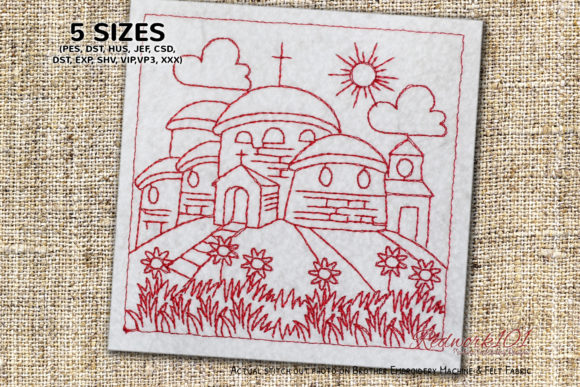
The first thing that strikes me about this design is its mood. There is a serene, almost nostalgic quality to the imagery. The concept of a church perched atop a mountain immediately evokes feelings of peace, spirituality, and refuge. For those of us working in the Religion category, finding imagery that feels reverent without being overly ornate or dated can be a challenge. This redwork style leans into simplicity, using clean lines to define the architecture and the natural surroundings. It avoids the heavy saturation of a full-fill design, which gives it a timeless, hand-drawn aesthetic that fits perfectly with current trends in rustic and farmhouse decor.
Visual Personality and Layout
The layout of the Church Building on Mountain Redwork is balanced, with the structure serving as the focal point against the organic shapes of the mountain. In redwork, the absence of dense fill stitches means the negative space does a lot of the heavy lifting. This makes the design incredibly versatile. It doesn't scream for attention; instead, it invites the viewer to look closer. The line weight appears consistent, which is crucial for maintaining clarity when the design is scaled down for smaller items like patches or baby clothes.
One specific detail mentioned in the product notes is the optional box stitch surrounding the image. As a reviewer, I appreciate this flexibility. Sometimes you need a defined border to frame a pocket on a tote bag or to create a clean edge for an appliqué patch. Other times, you want the image to float freely on a sweatshirt or pillow cover. Having the option to toggle this feature allows the same embroidery file to serve multiple purposes within a craft business inventory.
Real-World Application Scenarios
To truly evaluate this design, I imagined several practical scenarios where I might use it for client projects or my own Etsy seller shop. Here is how I see the Church Building on Mountain Redwork performing:
- Custom Apparel: This design would look exceptional on the left chest of a navy blue or charcoal grey hoodie. The single-color execution keeps it subtle and professional, perfect for church staff uniforms or ministry team apparel.
- Tote Bags and Aprons: Because redwork relies on outline stitching, it sits flat on the fabric. This makes it ideal for tote bags that need to be folded or aprons that will be washed frequently. There is less risk of the stitching becoming stiff or uncomfortable compared to high-density fill designs.
- Home Decor: Imagine this stitched onto a linen pillow cover or a kitchen tea towel. The spiritual theme pairs beautifully with neutral home textiles, adding a touch of warmth and meaning to a living room or kitchen space.
- Patches and Badges: If you are creating embroidered patches for jackets or backpacks, the clear outlines of this design make it easy to cut and seal. The mountain silhouette provides a natural shape for a custom patch.
Technical Considerations for Stitching
While the aesthetic is strong, we must discuss the technical realities of stitching this design. Redwork is generally forgiving, but it is not immune to issues if the wrong materials are used. Since the design relies heavily on running stitches or light satin columns to define the shapes, fabric choice is critical.
If you are stitching on stretchy fabrics like jersey knits or thin cottons, you must use a high-quality stabilizer. Without proper support, the long runs of stitching that define the rooflines or the mountain ridges could cause the fabric to pucker or gather. For a project like a baby onesie, I would recommend a cut-away stabilizer to ensure the design remains stable after repeated washings. On the other hand, if you are using a sturdy canvas for a tote bag, a tear-away stabilizer might suffice, but always test first.
Another factor to consider is thread contrast. In redwork, the thread color is the design. There are no fills to hide imperfections. If you choose a thread color that blends too much with the fabric, the details of the church windows or the mountain texture may get lost. Conversely, high-contrast combinations—like white thread on a dark denim background or black thread on a natural linen—will make the lines pop and ensure the visual appeal remains sharp.
Navigating Potential Pitfalls
There are a few situations where you should proceed with caution. If you plan to stitch this on a curved surface, such as the front panel of a cap, ensure your digitizing software (or the original file settings) accounts for the push-and-pull distortion. The horizontal lines of the church foundation could bow if not compensated correctly. Additionally, while the design is described as having "lovely features," always inspect the small details. Tiny corners in the steeple or intricate window panes can sometimes become problematic if the stitch density is too low for the thread weight you are using.
It is also worth noting that the product description mentions the outer box color is variable. This implies you have control over the thread palette. Use this to your advantage. For a holiday embroidery gift, you might choose a festive red or gold. For a more somber, traditional look, a deep navy or forest green might be more appropriate.
Value for Commercial and Personal Use
For small shop product creators and digital product sellers, the value of a design like the Church Building on Mountain Redwork lies in its broad appeal. It transcends specific seasons, making it a year-round asset for your catalog. Whether you are selling finished goods at a craft fair or offering personalized gifts for baptisms and weddings, this design carries a sense of professionalism and care.
Customers today appreciate handmade quality. They can tell the difference between a cheap, pixelated print and a well-executed embroidery job. Using a clean, well-defined design builds trust. It shows that you care about the finished product's longevity and appearance. When a customer receives a sweatshirt with this design neatly stitched on the chest, the clarity of the lines and the smoothness of the stitch path reflect directly on your brand consistency.
Final Designer Notes
Before you commit to a large production run or list this as a new item in your store, here is my practical advice:
- Test on Scrap Fabric: Always stitch a sample on the exact fabric you intend to use. What looks good on polyester might behave differently on cotton twill.
- Check Licensing: Confirm the license terms provided with the download. Ensure you are cleared for commercial use if you plan to sell finished items or digital mockups.
- Review Stitch Density: Zoom in on your embroidery software. Check the underlay and the connection points between the church and the mountain to ensure there are no unnecessary jumps or trims that could slow down your machine.
- Mockup Variations: Create printable mockups showing the design on both light and dark backgrounds. This helps potential buyers visualize the product and increases buyer engagement.
In conclusion, the Church Building on Mountain Redwork is a solid contender for anyone looking to add meaningful, high-quality imagery to their portfolio. Its simplicity is its strength, allowing it to adapt to various fabrics and products while maintaining a dignified and beautiful presence. With the right stabilizer, thread choice, and attention to detail, this design can elevate a simple piece of fabric into a cherished keepsake or a best-selling item in your boutique.