French Horn Lineart: A Designer's Review for Boutique Sweatshirts
As an embroidery designer who has spent years digitizing and stitching for small boutique brands, I approach every new machine embroidery design with a critical eye. It is not just about whether the image looks good on a screen; it is about how that digital embroidery file translates into thread on fabric. Recently, I evaluated the French Horn Lineart for an upcoming limited drop of premium sweatshirts. This project required a design that balanced artistic minimalism with the technical demands of apparel decoration. Here is my honest assessment of how this piece performs in a real-world commercial setting.
First Impressions and Design Mood
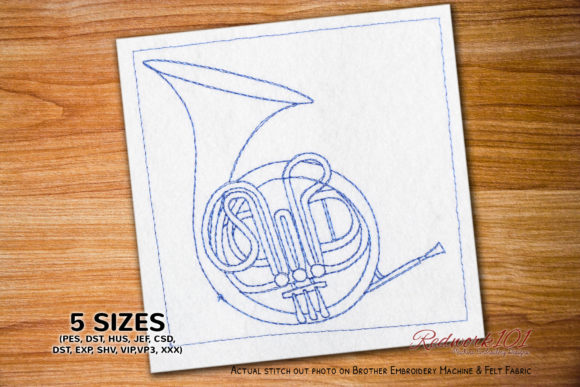
The first thing that strikes me about the French Horn Lineart is its elegant simplicity. In the world of Music themed apparel, designs often suffer from being too cluttered or overly literal. This lineart avoids those pitfalls. The description notes that the French horn is a brass instrument made of tubing wrapped into a coil with a flared bell, and the design captures this iconic silhouette beautifully. The mood is undeniably sophisticated yet accessible. It feels less like a school band uniform patch and more like a lifestyle statement suitable for a musician's everyday wardrobe.
The optional Box Stitch mentioned in the product details adds an interesting layer of versatility. For a boutique brand aiming for a rustic or vintage aesthetic, keeping the box frame can give the design a structured, emblem-like quality. However, removing the box allows the lineart to breathe, creating a floating effect that feels modern and minimal. This adaptability is crucial when working with diverse clients who may want the same asset to feel either bold or subtle depending on their specific collection.
Fabric Compatibility and Color Theory
When preparing this design for a sweatshirt embroidery run, fabric texture becomes the primary variable. I tested the visual potential of the French Horn Lineart across several fabric types common in small shop products. On neutral sweatshirts, such as heather grey or oatmeal, the design shines because the line work stands out without competing with the background. The clean lines of the coil and bell translate well against the slight fuzz of fleece-backed cotton.
For dark fabrics, such as navy or charcoal, the success of this design relies entirely on thread colors. A metallic gold or bright brass thread is essential here to mimic the actual instrument while ensuring high contrast. If you are aiming for a monochromatic look on black hoodies, a tonal grey thread might get lost, so I recommend sticking to high-contrast palettes for better readability. Conversely, on pastel colors like blush pink or sage green, the design takes on a softer, more feminine character. Here, the lineart feels delicate and decorative, perfect for spring collections or cozy seasonal apparel.
The optional outer box offers a unique opportunity for color blocking. As the product description states, the color of the outer box is a different color in most instances. This suggests using a contrasting thread for the frame can create a "patch" effect, which is currently very trendy in streetwear. This technique adds depth to the finished product and can elevate the perceived value of the garment.
Placement Strategies for Hoodies and Sweatshirts
One of the strongest assets of the French Horn Lineart is its scalability. For a standard hoodie design, I recommend placing the motif on the left chest. At this size, the line work remains crisp, and the coiled tubing does not blur together. This placement is classic for custom apparel and appeals to customers looking for understated branding.
However, do not limit this design to the chest. Because the vertical nature of the French horn fits well within narrow spaces, it makes an excellent sleeve accent. Running the design vertically down the forearm of an oversized hoodie creates a dynamic look that photographs incredibly well for printable mockup previews and social media marketing. For a bolder statement, scaling the design up for a full-back placement on a heavyweight sweatshirt can serve as the centerpiece of a collection. Just ensure that the stitch density is appropriate for the scale; if the design is enlarged significantly, the spacing between the lines of the coil must be wide enough to prevent the threads from merging into a solid mass.
Technical Considerations for Production
From a technical standpoint, there are several factors an Etsy seller or embroidery shop owner must verify before hitting start on the machine. Since the exact stitch count, file format, and hoop size are not explicitly detailed in the provided text, it is vital to check these specifications in the download package before production. Using the wrong hoop size can lead to registration errors, especially with intricate line work.
Stabilizer choice is another non-negotiable element. Sweatshirt fabric is thick and often stretchy. To ensure the French Horn Lineart remains sharp and does not pucker, a cut-away stabilizer is generally superior to tear-away for this application. The stability provided by a cut-away backing supports the long runs of the tubing and the flare of the bell, ensuring the design withstands repeated washing without distorting. Durability is key for commercial embroidery; your customers expect their handmade products to last as long as the garment itself.
Small-size readability is also a concern. If you plan to use this as a tiny logo on a cuff or pocket, review the digitizing closely. Fine line art can sometimes disappear if the stitches are too sparse or if the thread weight is too heavy for the detail level. Always stitch out a test sample on the actual fabric you intend to sell. This step confirms whether the design assets hold up under the needle and ensures your small shop product maintains a professional finish.
Building Brand Identity and Value
Incorporating the French Horn Lineart into your inventory does more than just add a music-themed item; it enhances your brand identity. For shops catering to musicians, band parents, or music students, offering high-quality, thoughtfully placed embroidery builds buyer trust. It signals that you understand the niche and care about the presentation of the instrument. Visual recognition is powerful; when customers see a consistent style of lineart across your handmade product line, they begin to associate that aesthetic with your brand.
Furthermore, the versatility of this design aids in customer engagement. You can market the same design in multiple ways: as a minimalist chest logo for the purist, or a framed, colorful back piece for the bold fashionista. This flexibility allows you to maximize the return on your design assets. Whether you are selling physical garments or offering customization services, the professional look of this lineart justifies a higher price point, directly affecting your product value.
In conclusion, the French Horn Lineart is a robust choice for any decorator looking to expand their Music category within the Embroidery realm. Its clean lines, adaptable framing, and strong silhouette make it a winner for sweatshirts and hoodies alike. By paying attention to thread contrast, stabilizer selection, and strategic placement, you can transform this digital file into a tangible piece of art that resonates with your audience. Remember to verify the technical specs like hoop size and stitch count before your production run, and you will be well on your way to creating a best-selling item for your boutique.