Emir's Palace Kano Bluework: A Designer's Review
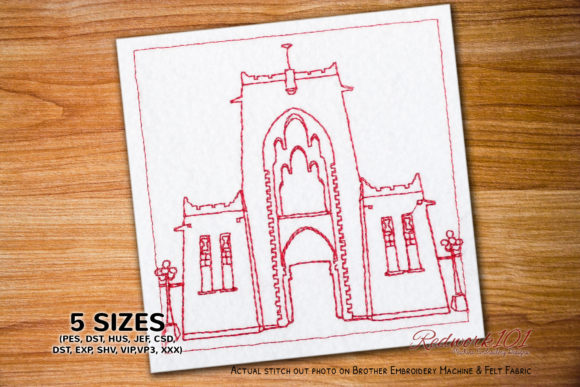
As an embroidery designer who has spent years digitizing and reviewing files for small business merchandise, I approach every new machine embroidery design with a critical eye toward commercial viability. When I first encountered Emir s Palace - Kano Bluework, my immediate reaction was one of appreciation for its cultural depth and architectural precision. This design, depicting the Gate to the Gidan Rumfa, carries a weight of history that translates surprisingly well into modern branded assets. For boutique owners, café operators, and handmade brands looking to elevate their brand identity, this piece offers more than just decoration; it offers a narrative.
The visual personality of Emir s Palace - Kano Bluework strikes a balance between classic elegance and rustic authenticity. The "Bluework" designation suggests a reliance on tonal variations within a specific color family, which often results in a sophisticated, almost ceramic-like finish. In the context of Asia-inspired motifs, this design avoids the trap of being overly ornate or cluttered. Instead, it feels structured and grounded. For a creative studio or a florist aiming for a premium aesthetic, this design signals quality and attention to detail without screaming for attention. It is decorative yet dignified, making it an excellent candidate for businesses that want to project stability and heritage.
Real-World Application for Small Business Merch
When evaluating how Emir s Palace - Kano Bluework performs in real business scenarios, the versatility is impressive. Imagine a local bakery or a high-end pet brand wanting to create limited-run custom apparel for their staff. This design works exceptionally well as a chest logo accent on work shirts. The architectural lines of the palace gate provide a strong focal point that remains legible even from a distance. Unlike purely floral or abstract designs, the structural elements of the gate offer a sense of permanence, which subconsciously builds customer trust.
For Etsy sellers and crafters, the potential for embroidered patch production is significant. Patches are a low-risk, high-reward product line for small businesses. Because the design features distinct outlines and defined sections, it can be backed with merrow edges or laser-cut finishes effectively. If applied to tote bags, the design serves as a central mark that elevates a simple canvas bag into a statement piece. The description notes that the outer box stitch is optional; for a tote bag, keeping the box might frame the design nicely, whereas for a sleeve detail on a denim jacket, removing the box could allow the architecture to breathe more naturally against the fabric texture.
Furthermore, consider the use of this design on aprons for a coffee shop or pottery studio. Apron embroidery requires durability and clarity. The bold lines of the Emir's Palace gate hold up well against the wear and tear of daily service. It transforms a standard uniform item into a conversation starter, enhancing the overall customer experience. Whether used as a cap design for a delivery service or a subtle mark on product packaging accents, Emir s Palace - Kano Bluework adds a layer of professionalism that generic clipart simply cannot match.
Technical Considerations and Placement Strategy
However, no design is without its challenges, and a professional review must address where caution is needed. The intricate nature of the Gidan Rumfa gate means that stitch density is a crucial factor. If you are planning to scale this down for a small patch size, such as a pocket logo on a polo shirt, you must verify that the fine details do not collapse. High stitch density in small areas can lead to thread breaks or a stiff, cardboard-like feel in the finished product.
Placement on curved surfaces, particularly for cap embroidery, requires careful hooping and potentially a modified digitizing version. The front panel of a baseball cap is unforgiving; if the design has long spans of running stitches without adequate underlay, they may sag over time. Additionally, the description mentions that the color of the outer box varies. When working with dark uniforms, you must ensure there is sufficient contrast between the thread colors and the garment. A blue-on-black combination might look sleek in a digital preview but could vanish in low-light restaurant settings.
Fabric texture also plays a pivotal role. This design shines on medium-to-heavy weight cottons, twills, and denim. On highly textured fabrics like thick wool or loose-weave linen, the fine architectural details might get lost. For items that require frequent washing, such as staff t-shirts or kitchen towels, testing the durability of the satin stitches against friction is essential. Always confirm the hoop size required before committing to a production run, as larger designs may not fit on standard cap frames or small pouch hoops.
Impact on Brand Identity and Customer Perception
Incorporating Emir s Palace - Kano Bluework into your product line does more than add visual interest; it shapes perception. For a handmade brand, using a design with such specific cultural roots demonstrates a commitment to storytelling. It suggests that the business values craftsmanship and history. This alignment can significantly boost buyer engagement, as customers today are increasingly drawn to products with a soul and a story behind them.
Visual consistency is key to building recognition. If you use this design across various touchpoints—such as on hang tags, embroidered labels, and social media printable mockups—it creates a cohesive visual language. The "Bluework" aspect allows for easy adaptation to different brand color palettes while maintaining the integrity of the design. Whether you are selling at a local craft fair or shipping globally, the professional execution of this digital embroidery file communicates that your business takes quality seriously.
Essential Designer Notes for Production
Before launching any commercial embroidery project with this file, I strongly advise following a rigorous testing protocol. First, stitch the design out in black and white or grayscale. This removes the distraction of color and allows you to see the true structure and contrast of the stitches. Check specifically if the design holds its shape at the smallest size you intend to use.
- Review Thread Contrast: Ensure the selected thread colors provide enough definition between the gate structure and the background.
- Inspect Spacing: Look for areas where stitches might be too close together, which can cause puckering.
- Test on Real Fabric: Never rely solely on screen simulations. Stitch on the actual material you plan to sell.
- Use Proper Stabilizer: Given the architectural details, a cut-away stabilizer is often safer than tear-away for long-term durability.
- Create a Mockup: Present a physical sample or a high-quality photo to your client or team for approval before full production.
- Compare Assets: Place this design beside your existing logo or other design assets to ensure they complement rather than compete with each other.
Finally, a critical reminder regarding licensing: always confirm commercial licensing terms before using Emir s Palace - Kano Bluework for business purposes. The description provided does not explicitly state the license type, so assuming it is free for commercial use could be a costly mistake. Verify the rights to ensure you can legally sell items featuring this embroidery file. By taking these precautions and leveraging the unique aesthetic of this Asia-inspired motif, you can create merchandise that stands out in a crowded market.