Cute Cartoon Baby and Owl Redwork Review
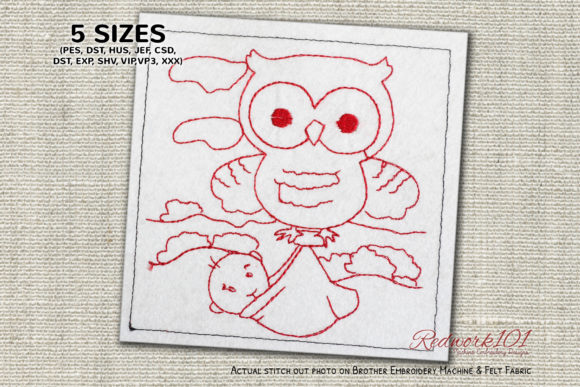
As an embroidery designer preparing for a busy weekend at the local craft fair, my table needs to tell a story instantly. Customers walk by quickly, scanning hundreds of handmade items, so every craft fair product on display must grab attention within seconds. Today, I am evaluating the Cute Cartoon Baby and Owl Redwork design to see if it earns a prime spot on my booth samples. This isn't just about whether the file stitches out well; it is about whether this specific image of a cartoon owl carrying a cute baby and flying in the sky will convert browsers into buyers for my small shop.
First Impressions and Market Appeal
The first thing that strikes me about Cute Cartoon Baby and Owl Redwork is its undeniable charm. In a market often saturated with overly complex or generic floral patterns, this design offers a whimsical, narrative quality. The concept of a bird transporting a child feels like a scene from a bedtime story, which immediately categorizes it as a perfect handmade product for the nursery or children's boutique sector. It leans heavily into a soft, playful aesthetic rather than a rustic farmhouse or ultra-modern vibe. For an Etsy seller or boutique maker, this emotional connection is gold. It suggests warmth, care, and imagination.
However, the "Redwork" designation in the title requires careful consideration. Traditionally, redwork uses a single color thread, usually red, on white fabric. If this machine embroidery design is strictly single-color, it offers a vintage, minimalist appeal that works beautifully on tea towels and flour sack towels. If it utilizes multiple thread colors despite the name, it becomes bolder and more suitable for apparel. Based on the description mentioning optional box stitches and varying outer box colors, this file likely offers versatility. This flexibility is crucial for a digital embroidery file intended for commercial use, allowing me to adapt the look for different fabric textures and customer preferences.
Product Suitability and Display Strategy
When deciding where to place Cute Cartoon Baby and Owl Redwork on my display table, I have to think about visibility and utility. A large tote bag design is often the best canvas for this type of imagery. Placing the flying owl and baby centrally on a natural canvas tote allows the details to shine without competing with seams or pockets. It transforms a simple bag into a statement piece that a parent might carry to the park or use as a diaper bag alternative.
For kitchen goods, tea towel embroidery is a strong contender. The linear nature of a flying scene works well horizontally across the bottom third of a towel. However, I must be cautious about the stitch density. Towels have loops and texture that can swallow fine details. If the design has tiny features in the baby's face or the owl's feathers, they might get lost on a waffle weave or looped terry cloth. A smooth linen-look cotton would be a safer bet for maintaining the clarity of this Birds category design.
I am also considering apron embroidery for the bib section. This is a high-visibility area when worn, making it excellent for photography and printable mockup creation for online listings. An embroidered patch is another viable option; if the design holds up well at a smaller scale, turning it into an iron-on patch expands the product line to include items I don't manufacture myself, like denim jackets or backpacks. For caps, the curved surface presents a challenge. Unless the design is simplified, the distortion on a curved brim might make the "flying" aspect look awkward. I would likely skip the caps for this specific file unless I can test it on a flat front panel first.
Production Realities and Technical Considerations
From a production standpoint, batch efficiency is key. Can I stitch ten of these while managing other orders? The description notes that the box stitch is optional. I strongly advise running the version without the box for most applications unless the border adds necessary structural stability to the fabric. Unnecessary stitches increase production time and thread consumption without adding perceived value to the customer. Furthermore, the note about the outer box color varying suggests I need to double-check the embroidery file settings before loading it into my machine. Consistency in thread colors is vital for brand consistency across a collection of finished products.
One major concern with any design featuring characters is the hoop size requirement. While the exact dimensions are not provided in the product description, a scene involving two characters flying usually requires a medium to large hoop to prevent crowding. Before committing to a bulk run of tote bags, I must verify the hoop size compatibility with my machine. Additionally, the lack of specific stitch count data in the description means I cannot estimate run times accurately until I load the file. This is a critical step for pricing my commercial embroidery services correctly.
Fabric choice will make or break this design. On dark fabric, a standard redwork thread might not pop enough unless I switch to a high-contrast color like bright yellow or white. The "Redwork" style relies on contrast; if the thread blends into the background, the cute narrative is lost. I also need to select the right stabilizer. For stretchy fabrics like those used in baby onesies, a cut-away stabilizer is non-negotiable to prevent puckering around the dense areas of the owl's wings. For woven tote bags, a tear-away might suffice, but testing on scrap fabric is the only way to be sure.
Maximizing Sales Potential
To maximize the sales potential of Cute Cartoon Baby and Owl Redwork, presentation is everything. In a physical booth, grouping this design with other nursery-themed items creates a cohesive "Baby & Kids" zone. Pairing the embroidered tote with a matching pillow cover or a small fabric pouch creates an upsell opportunity. Customers love buying coordinated sets. The visual appeal of the owl and baby flying together evokes a sense of adventure and protection, which resonates deeply with parents and gift-givers.
For online sales, the photographability of this design is high. The clear lines and distinct characters translate well to digital images, provided the lighting highlights the texture of the stitches. When creating design assets for Etsy listings, I would focus on lifestyle shots showing the product in use—perhaps a tote bag hanging on a stroller or an apron worn while baking. This helps the customer visualize the finished product in their own life.
Ultimately, this design feels like a winner for the spring and summer market seasons. It is lighthearted, gender-neutral enough for wide appeal, and versatile across various product types. However, success depends on execution. I must ensure the small shop product quality remains high by avoiding cheap fabrics that undermine the detailed stitching. Checking the licensing terms is also mandatory; since the description mentions commercial possibilities, I need to confirm if there are limits on the number of physical items I can sell or if the license covers unlimited production for craft fairs.
In conclusion, Cute Cartoon Baby and Owl Redwork has the potential to be a standout item in my inventory. It balances cuteness with a classic embroidery style that appeals to a broad demographic. By carefully selecting the right fabrics, optimizing the stitch settings for the material, and presenting it as part of a thoughtful gift collection, this handmade product can drive significant engagement and sales. As always, the golden rule applies: test on scraps, check your tension, and let the quality of the stitch speak for itself.